THE NAME
Who were Aquila and Priscilla?
A married couple in the early Church. Tentmakers, refugees, hosts, teachers. Paul never mentions one without the other.
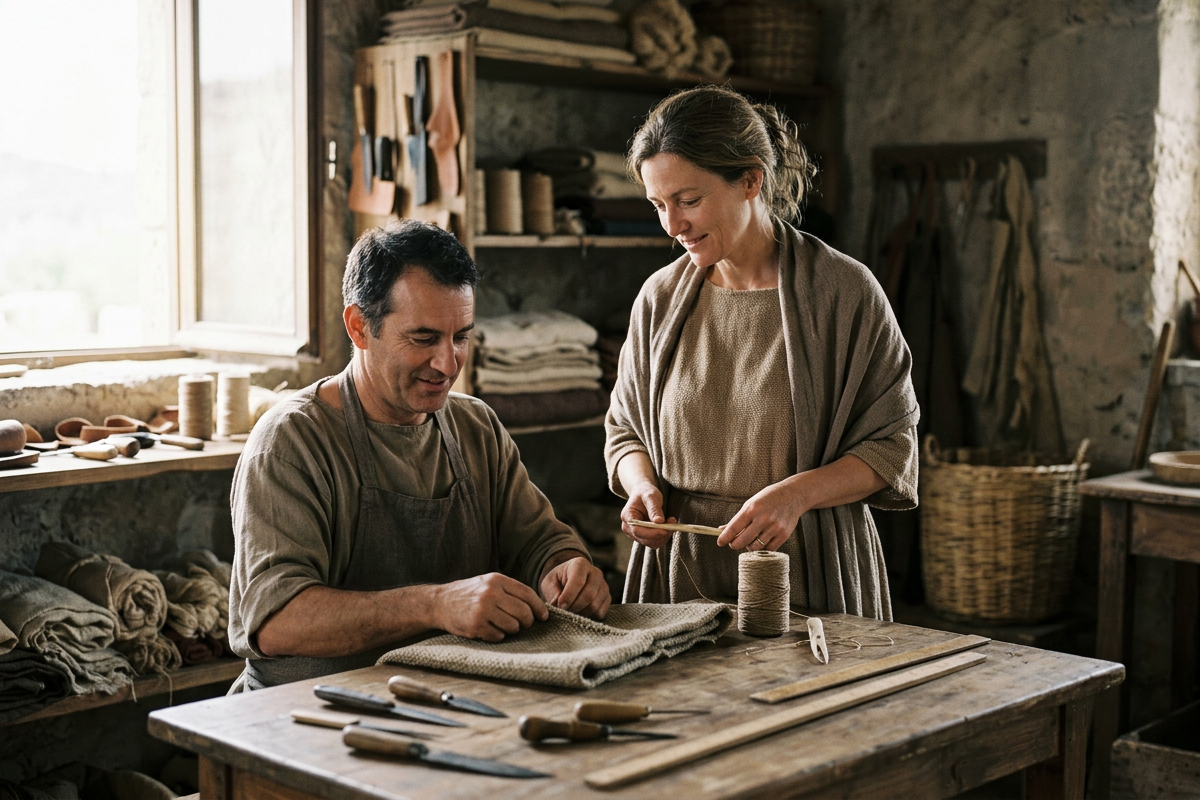
ORDINARY PEOPLE
A quiet revolution.
In the pages of Scripture, among apostles and prophets, stands a married couple whose home became a sanctuary, whose tentmaking shop doubled as a classroom, and whose partnership in life and faith opened a road for generations to follow.
Aquila and Priscilla were not clergy. They were refugees, driven out of Rome by imperial decree. They were immigrants, uprooted again and again, from Rome to Corinth to Ephesus and back. They were laborers, hands calloused from leather and canvas, stitching tents by day and building the Church by night.
Yet in their ordinary faithfulness, they became extraordinary.
WHERE TO FIND THEM IN SCRIPTURE
Acts 18:1-3
1 After this he left Athens and went to Corinth. 2 There he met a Jew named Aquila, a native of Pontus, who had recently come from Italy with his wife Priscilla because Claudius had ordered all the Jews to leave Rome. He went to visit them 3 and, because he practiced the same trade, stayed with them and worked, for they were tentmakers by trade.
Acts 18:18-19
18 Paul remained for quite some time, and after saying farewell to the brothers he sailed for Syria, together with Priscilla and Aquila. At Cenchreae he had his hair cut because he had taken a vow. 19 When they reached Ephesus, he left them there, while he entered the synagogue and held discussions with the Jews.
Acts 18:24-26
24 A Jew named Apollos, a native of Alexandria, an eloquent speaker, arrived in Ephesus. He was an authority on the scriptures. 25 He had been instructed in the Way of the Lord and, with ardent spirit, spoke and taught accurately about Jesus, although he knew only the baptism of John. 26 He began to speak boldly in the synagogue; but when Priscilla and Aquila heard him, they took him aside and explained to him the Way [of God] more accurately.
Rom 16:3-5
3 Greet Prisca and Aquila, my co-workers in Christ Jesus, 4 who risked their necks for my life, to whom not only I am grateful but also all the churches of the Gentiles; 5 greet also the church at their house.
1 Cor 16:19
19 The churches of Asia send you greetings. Aquila and Prisca together with the church at their house send you many greetings in the Lord.
2 Tim 4:19
19 Greet Prisca and Aquila and the family of Onesiphorus.
WHY THEIR STORY STILL MATTERS
God does not only use the famous or the formally trained.
He uses faithful people who
work with their hands and worship with their hearts
make their marriage a mission field
teach with humility, not superiority
They were never bishops or apostles. They wrote no epistles. They performed no recorded miracles. Yet Paul called them his "fellow workers in Christ Jesus" and said that all the churches of the Gentiles were grateful for them.
Romans 16:3-4
welcome strangers as family
see their home as an embassy of heaven
stay committed when the road gets hard
WHAT MADE THEM REMARKABLE